A Part of Norwegian West Coast History
Early History of the Kartveit Guesthouse
The wood in the house is marked and numbered, meaning it was built with wood used in earlier houses and transported to the westcoast from Norway’s inland.
Such practices were quite common in the past. Considering the ways in which the wood in the house has been handled, we can tell that it stems from different times and periods. The oldest part of the house is from the late MIddle Ages, indicated by the fact that the surface of the thimber is round, like the original log. Houses or walls put up later will have thimber where the surface was levelled. These are a couple of the indications of the age of the wood, visible in the two living rooms.
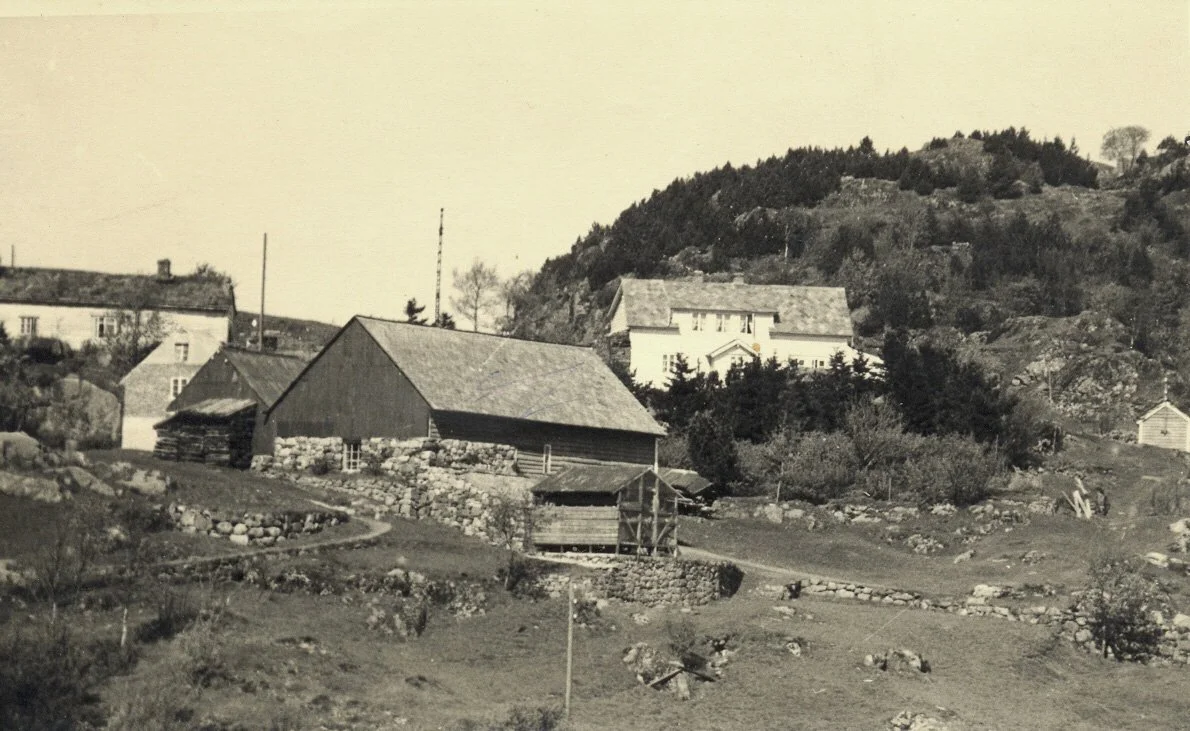
The guesthouse is one of two houses once part of a small village, called “cluster courts” until the 19th Century. 5-7 houses would be situated close to each other. Each of the owners of the houses would have several patches of land scattered around within less than half an hour’s walk. Then, in the 1880’s, the land was divided differently, so that each farmer would have one large piece of land. The owners of the houses which then ended up in the neighbour’s property, had to move their houses within a certain time limit (10-20 years).
Farmers would mostly raise animals – a few cows, sheep, pigs and chickens. They would also grow potatoes and vegetables, mostly for their own use. Up to early 1900s they might also grow grain, like barley or wheat. Living on an island they would also do fishing, both for their own use and for sale. Eventually some would also combine farming with other labor outside of their own farm.
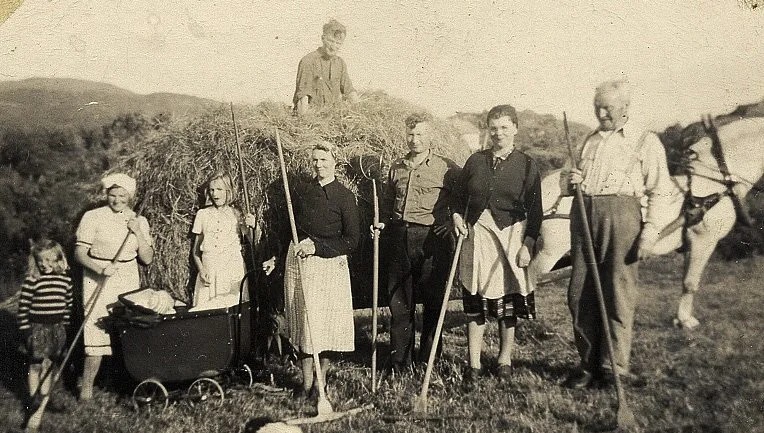
Collecting food for the animals for the winter season has been an important part of survival and of the culture. During the summer season this would include chores for the entire family, including siblings who had moved away (but within reach). This would also be a social event, working and staying close to each other for several weeks.
This work is now being done by one or maybe two persons and their machines in a less number of days than there used to be weeks. Fewer farmers are now harvesting several farms.
The Origin of the Name Kartveit
During Catholic times, the church at nearby Manger was dedicated to St. Catherine, and Kartveit has most likely been part of the church property. In fact, St. Catherine has most likely provided the area with its name, Kartveit. In the 1500’s, the place was called “Karinethuedt”, and over the years this has developed into “Kartveit.” One of the guesthouse’s bedrooms is now named after St. Catherine, called ‘The Catharina Chamber’.
According to a different traditional story, a woman called “Catherina” was the very first farmer here, and the place was named after her. Either way, the name is derived from a woman who has made an impact.
Kartveit Family History throughout the Centuries
The farm has belonged to the same family, the Kartveit family, from at least 1748.
In 1945, Einar Kartveit married Gudrun Bakke and moved into the main farm house. It was unlikely, because Einar was the youngest of 9 siblings, six boys and three girls. Due to the fact that two of the boys emigrated to the United States, and the remaining brothers and sisters settled down in Bergen or Radøy, Einar nevertheless inherited the farm. Then four children grew up in the house, among them, Gunnar, who is the current caretaker of the guesthouse.
The Kartveit guesthouse used to be the dwelling house of the farm until 1968. From then, the house has been used for recreation. In 2009, the house was renovated, to meet all modern needs. The Kartveit family continues to meet at their heritage house for family events and on special occasions. Gunnar’s daughter Gudveig and her husband Odd Martin is today in charge of the main farm.
-
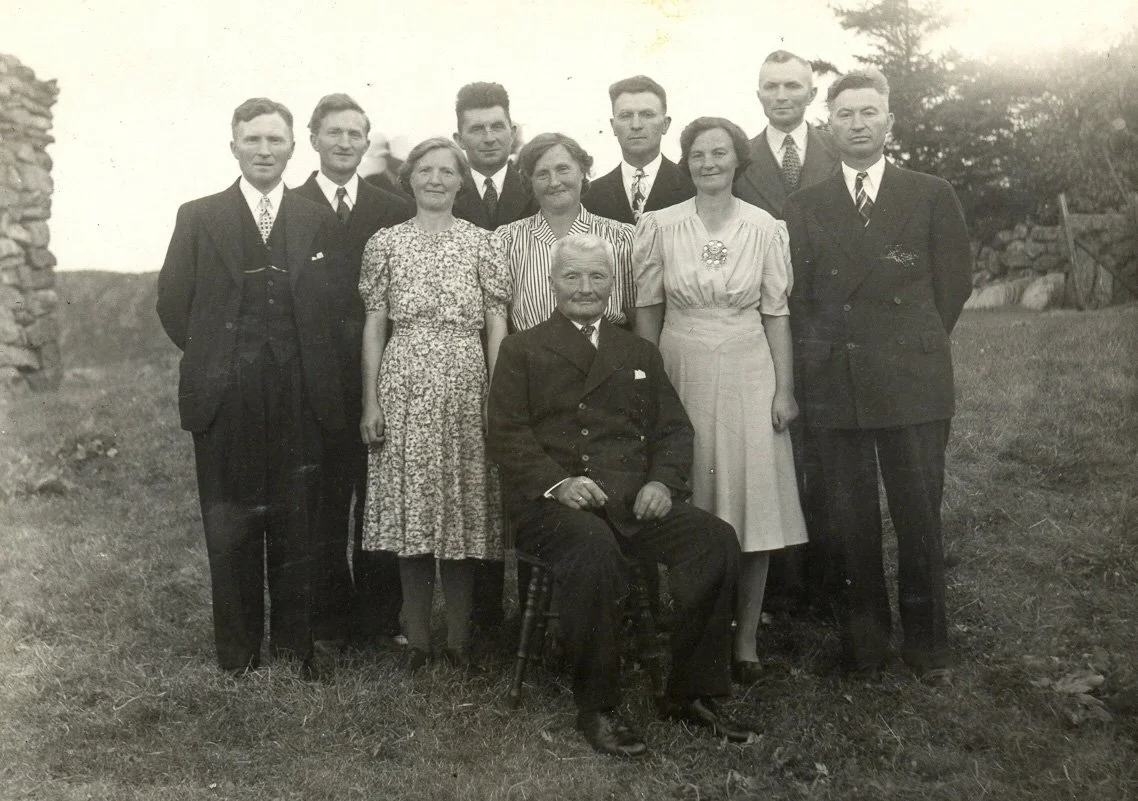
Mons Kartveit on his 75th birthday, 1947
Mons Kartveit with his nine children.
-
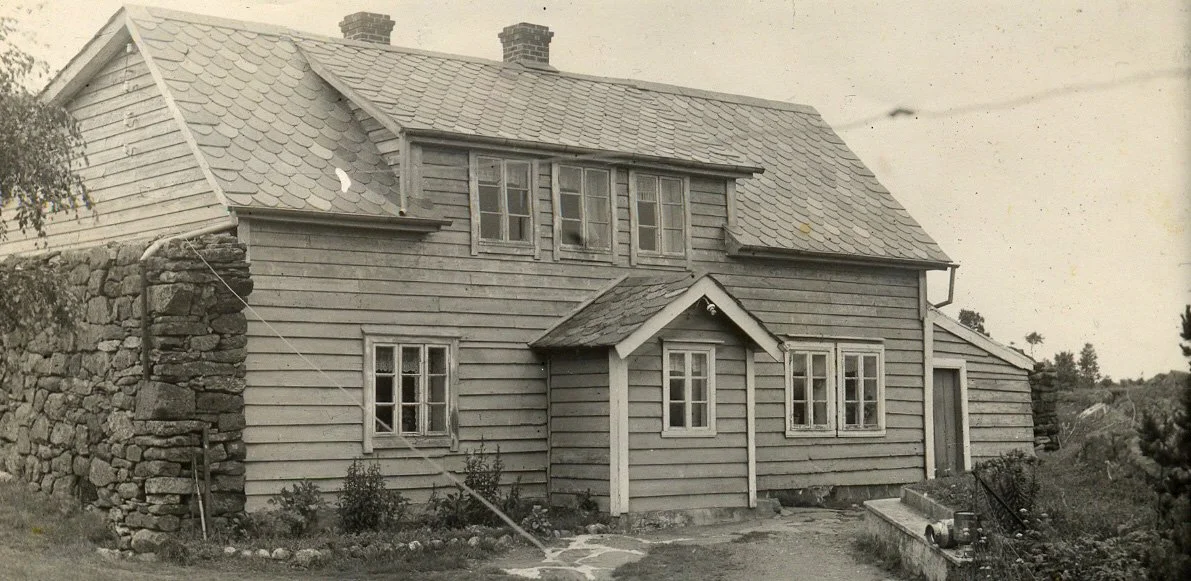
The house anno 1950
From 1945 until 1967 there were three generations living in the house: Gudrun and Einar Kartveit with their four children, and also one of these children’s grandparent, living off the land and their farm animals.